READ/LISTEN ONLINE:
SOME STUDY GEMS:

Click on the gem below to read the study notes:
Wedding Clothes
Matthew 22:12 “So he said to him, ‘Friend, how did you come in here without a wedding garment?’”
Linen is often the fabric of choice for priests, angels as well as the “Righteous”. Revelations 19:8 says, “For the fine linen represents the righteous acts of the saints.” Click here to read from Jeremiah 13 what was taught about Linen, and the Linen belt, that the wedding clothes, linen, represent your acts.
Marriage and the Resurrected
Matthew 22:30 “For in the resurrection they neither marry nor are given in marriage, but are like angels of God in heaven.”
The Sadducees and Pharisees had many disputes among themselves about what life will be for the Resurrected. They reference the laws of Moses, from Deuteronomy 25:5-10 which explains the marriage duty of the surviving brother. These laws were made to take care of the widows, as well as to protect their family inheritance and lands. It is important to read the Torah and the laws, and the prophets, to understand the laws and their purpose. The laws (Torah) are there as a guidance to teach, but also to expose our heart’s intentions.
Just a couple of chapters earlier, the disciples also enquired from Yeshua about marriage and divorce, in Matthew 19:10-12. Yeshua replied to the disciples’ response that it is better not to marry, that “if anyone can do what you suggested (not to marry), it is better for them to do so“. This is certainly not easy, and there are not many people that is strong enough not to desire marriage. But it is certainly comforting for those who do not desire marriage to know, marriage is not the end goal in life.
All the laws
Matthew 22:40 “On these two commandments hang all the Law and the Prophets.”
The greek word for Law is Nomos G3551 – nomos, click here for more bible verses quoted by Yeshua and the Gospels about the Law/Nomos. When Yeshua says “Law and Prophets”, we know for a fact He is talking about the Torah (laws of Moses, the first five books of the Bible). The two commands Yeshua is talking about, is also found in the Torah! This is why the Pharisees ask, which commandment is the greatest in Moses’ Teachings.
The first command, to love YHWH with all your heart and soul and mind is found in Deuteronomy 6:5, “You shall love YHWH your Elohim with all your heart and with all your soul and with all your strength”. The second command to love your neighbor as yourself is found in Leviticus 19:18, “but you shall love your neighbor as yourself: I am YHWH”.
The word linking these, are “hang” or “depend”. The greek word is G2910 – kremannymi, which means it is suspended by, hanging on, summed up. So all the other laws from Torah (first five books of the Bible) is summed up, hangs and is valid by the love you have for YHWH and your neighbor. That is the purpose and what the laws’ guidance and teaching is all about, to teach and test your love.
Moses' Seat, Translation issues
Matthew 23:1-2 “Then Jesus spoke to the multitudes and to His disciples, saying: “The scribes and the Pharisees sit in Moses’ seat. Therefore whatever they tell you to observe, that observe and do, but do not do according to their works; for they say, and do not do.”
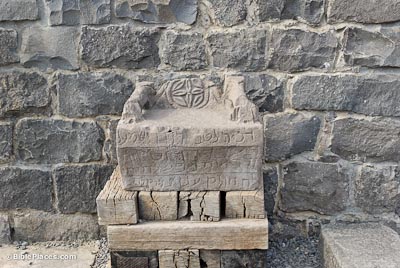
The “Seat of Moses” was a chair of honor in ancient synagogues, from which authoritative teachers, such as scribes and Pharisees, would read the law. . An actual “Seat of Moses,” carved from basalt, was discovered in the ancient synagogue ruins of Chorazin and is now housed in the Israel Museum, with a replica on-site.
Moses’ seat in Matt 23:2 is easily misunderstood today when we don’t have all the facts, as a matter of fact, most translations even leave the part out, and might just read “those who teach with Moses’ authority“. “Moses’ seat” was an expression that was understood by his listeners of that day, but the meaning is lost to most who read this passage today. Moses’ seat refers to a literal throne-like chair that sat in Jewish synagogues, and one can type in “Moses’ seat” into an internet search engine and find actual photos of these seats that have discovered in ancient Jewish synagogues. The rule was, only certain people were allowed to sit in Moses’ seat, and when they do, they only read from the Torah, which is called Moses’ Teachings. They are not allowed to comment, explain or teach – only read the Torah when they sit in the chair.
Verse 3 says, “Therefore whatever they tell you to observe, that observe and do, but do not do according to their works; for they say, and do not do.”
Today the Jews follow the written Law (Torah) and the oral Law (or they called it “oral Torah”). The concept of Oral Law began as a tradition of interpretation of the Torah by the Pharisees and Scribes, who were experts in the Law, however adding their own rules and commentaries and ideas. The Oral Law was not written down until around 200AD. The need to record this tradition in writing became urgent following the destruction of the Second Temple in 70AD, which threatened to erase the accumulated knowledge of the Pharisees. The Oral Law itself is a vast body of post-biblical Jewish legal traditions and includes rabbinic commentaries and interpretations of the Torah. Among the Jews they rather teach the oral law, explaining that the Torah is too difficult to understand and should be avoided, thus the Oral law today among the Jews takes preference. This is exactly what Yeshua was warning against, taking on new “Scriptures” and considering the Torah as “old”, and teaching people the Torah (or today “old testament”) is too hard and one should read only the “new” teachings.
Verse 13, “But woe to you, scribes and Pharisees, hypocrites! For you shut up the kingdom of heaven against men; for you neither go in yourselves, nor do you allow those who are entering to go in.” Verse 28, “Even so you also outwardly appear righteous to men, but inside you are full of hypocrisy and lawlessness.”