

READ/LISTEN ONLINE:
SOME STUDY GEMS:

Click on the gem below to read the study notes:
Translation issue, a False Sabbath
Amos 6:3 “Ye that put far away the evil day, and cause the seat of violence to come near;” This is what most bibles today read, as it is translated from the Hebrew Masoretic texts. However from the Greek Septuagint LXX it reads, “Ye who are approaching the evil day, who are drawing near and adopting false sabbaths”
For a quick introduction on Masoretic vs. Septuagint LXX, see our post from Psalm 151 (click here to read more). In that post, Psalm 151 was kept in the LXX, but removed from Masoretic, and thus removed from MOST bibles today, and yet it was found in the original Hebrew texts from the dead sea scrolls. Before the Masoretic and Septuagint, there was only the Hebrew Scrolls. The Septuagint LXX was a translation from the original Hebrew scrolls, around 3BC. Septuagint means “seventy”, and was a reference to the 70 scribes who were assigned the task to translate the Hebrew to Greek, as most of the Hebrew community around that time spoke Greek. Also around the same time, a group of people called the Masoretic scholars brought in a new concept in Hebrew writing, called the “vowels”. Original Hebrew does not contain any vowels, so they developed the system of dots and dashes, called nikkudot, to indicate vowel sounds and other phonetic information, preserving the pronunciation of the biblical text. This was called the Masoretic Hebrew.
Like in this case with Amos 6:3, the original Hebrew contains words without vowels, that can be interpreted two ways according to Masoretic texts, depending how you add the vowels. However the Septuagint LXX translated it giving us only one interpretation. The original Hebrew texts found in the dead sea scrolls do not have the masoretic vowels.
- Hebrew Original Word : שבת
- Masoretic adding vowels to change to SEAT(H7675) : שֶׁבֶת
- If adding vowels different, the word is SABBATH (H7676) : שַׁבָּת
- Septuaging LXX translated word is SABBATH : σάββατον Sabbaton (G4521)
So bible translators decided to use the word seat, from the Hebrew H7675 – šeḇeṯ, where they also could have used the Hebrew word SABAT H7676 – šabāṯ.
The Hebrew word in Amos 6:3 for violent or false (depending on the translation), is Hamas H2555 – ḥāmās. This word might seem familiar, as it is used in politics and war today, but the meaning of it is violence, or False – again, depending on where you add the vowels on the original Hebrew letters. What would make more sense to you that YHWH is sending a warning? A violent seat – or a False Sabbath? A False Sabbath would then be any other day that is declared “holy”, apart from the weekly 7th day rest on a Saturday (which in most cultures are called Sabbath), and also apart from the 7 High Sabbath Days given by YHWH for His Appointed Times (click here to read more on Sabbath, or the Appointed Times)
Locusts, Gog and Magog
Amos 7:1 “Thus hath YHWH Elohim shewed unto me; and, behold, he formed grasshoppers in the beginning of the shooting up of the latter growth”
The Hebrew word used in this verse for grasshopper or locust is Gob H1462 – gôḇ. However the locusts that we have seen in Exodus with the ten plagues, and in other bible verses, are the Hebrew word Arbe H697 – ‘arbê.
Here this specific word Gob gets very interesting. The word means to dig, like a well, or to plough ground, to appear and disappear again. But the root word is Gog H1463 – gôḡ, which means mountain. Gog is prophesied for the end times, especially in Ezekiel 38 and 39, and in Revelations. Locusts have been used in the plagues of Exodus, but also as plagues for sin or warning of death coming, and then off course with the end times. Locusts and Gog have a connection.
The only other time the word Gob is used is in the prophesies of Nahum 3:17 “Thy crowned are as the locusts, and thy captains as the great grasshoppers”. The root word for locust (arbe), means swarm of deceit. Looking into the Hebrew meaning, this verse is saying, “You are making a swarm of deceit holy like a crowned prince, and Gog your military captain”. Here the locusts and grasshoppers are pictured with war and a crown. Revelation 9:7 says, “And the shapes of the locusts were like unto horses prepared unto battle; and on their heads were as it were crowns like gold, and their faces were as the faces of men.”
Magog means “son of Gog”, and in Revelation 20:8 it says, “And shall go out to deceive the nations which are in the four quarters of the earth, Gog and Magog, to gather them together to battle: the number of whom is as the sand of the sea.”
Did you know – that Gog and Magog actually existed? According to history, Gog and Magog are identified as peoples or tribes from the land of the north, often associated with the geographic region of Europe, Russia, or the Caucasus Mountains. Historical figures like Josephus linked them to the Scythians, while during the Middle Ages, they were sometimes identified with Vikings and other European peoples. Gog and Magog appeared on ancient and medieval maps of the world. Medieval geographical maps that feature Gog and Magog include Al-Idrisi’s map of 1154, where they appear as Yajoj wa Majoj in northern China behind a great wall, and Late Medieval European Mappae Mundi such as the Hereford Mappa Mundi (c. 1280s) and the Ebstorf Map (c. 1300), which place them in the far northeast of Asia or the north, behind the Caspian Gates.
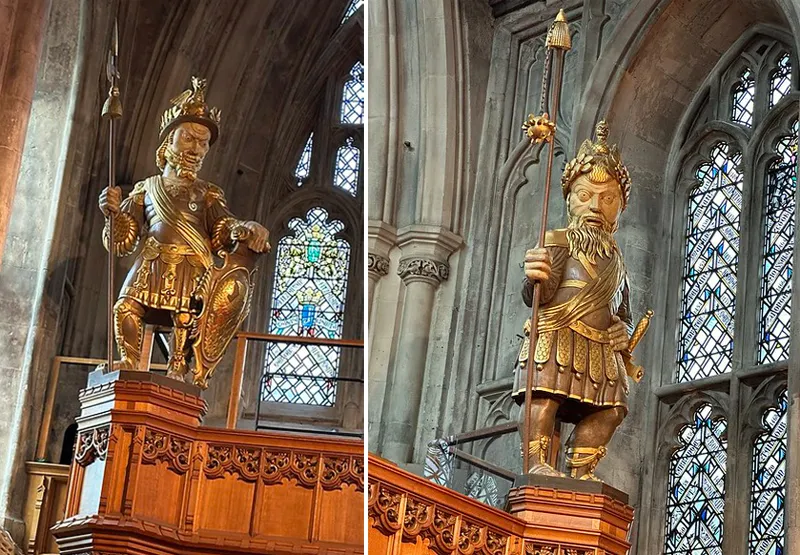
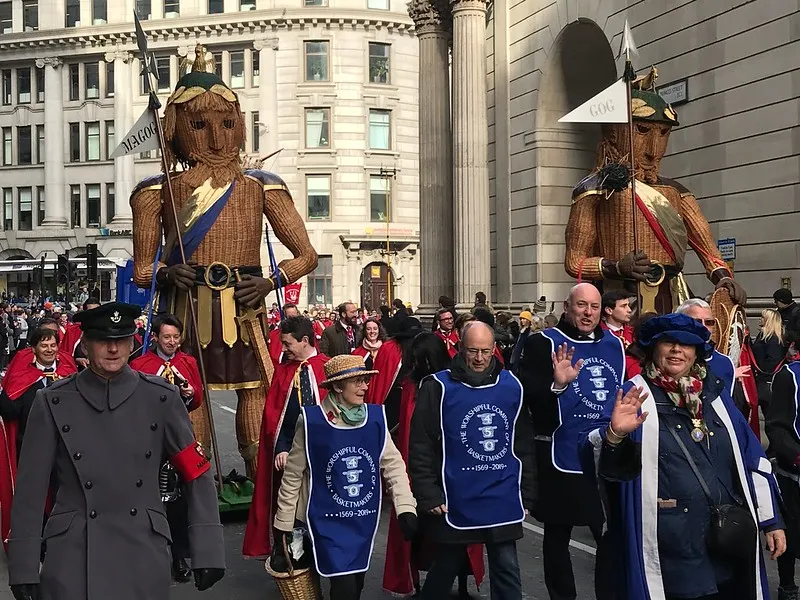
Did you know – that Gog and Magog are celebrated yearly? Yearly every mid November in the city of London, a festival called “Lord Mayor’s Show” is held, and have existed since King Henry V in 1413. The festival is a very important festival attended by all high ranking Freemasons.
Drought and Fire
Amos 7:4 “Adonay YHWH called for judgement by fire, which dried up the ocean and burned up the land”
See our previous posts on the term “Fire” (click here). The Hebrew word for fire is Es H784 – ‘ēš, and is basically used for confirming His covenant (in sacrifices) or judgement (breaking of the covenant). Deuteronomy 28 lists the blessings and curses, whether you choose to follow the laws and teachings of YHWH, or when you reject them. One of the curses is drought, and final judgement always comes with fire. Deuteronomy 28:22 “.. YHWH will send drought and scorching winds to destroy your crops.”
Summer Fruit
Amos 8:1 “Thus has YHWH Elohim shewed unto me: and behold a basket of summer fruit.”
The Hebrew word for summer fruit is Qayis H7019 – qayiṣ. Here in Amos 8, there is a Hebrew wordplay on the words for “summer fruit” (qāyiṣ) and “end” (qets). The Hebrew words are phonetically similar, with “qāyiṣ” sounding like “qets”. The vision of a basket of summer fruit symbolizes that Israel is “ripe” for judgment and that its time of grace is coming to an end. The fruit’s perfect readiness to be consumed signifies that the people of Israel had reached the peak of their sin and corruption, and YHWH’s patience was at an end.
The theme of summer also reminds one of YHWH’s appointed times. There is a season for growth and newness in Spring, a season for work and harvesting, a season for festivals, a season for closing the doors, a season to stay indoors with the cold and darkness. Click here to learn from Leviticus 23 the 7 Appointed Times (called Moedim in Hebrew) of YHWH. These appointed times start in Spring (in the northern hemisphere, March) and ends before Winter (November). From November to February there are NO festivals or feasts, as it is winter and a dark time. It is also the time of year when other religions would have their celebrations, and a lot of spiritual activity would be going on – hence a dark time – even though according to the world it is enjoying lots of “lights” festivals, but spiritually it is dark vs. light.
Hidden Word of YHWH
Amos 8:11-12 “Behold, the days come, saith YHWH Elohim, that I will send a famine in the land, not a famine of bread, nor a thirst for water, but of hearing the words of YHWH: And they shall wander from sea to sea, and from the north even to the east, they shall run to and fro to seek the word of YHWH, and shall not find it.”.
Body and Soul have parallels, and hunger is one of them. When a physical famine hits, it is because of sin, and it is the curse that follows. It is a warning sign to repent. Deuteronomy 8:3 says, “And He humbled thee, and suffered thee to hunger, and fed thee with manna, which thou knewest not, neither did thy fathers know; that he might make thee know that man doth not live by bread only, but by every word that proceedeth out of the mouth of YHWH does man live.” Yeshua repeated these exact words in Matthew 4:4, “It is written: ‘Man shall not live on bread alone, but on every word that comes from the mouth of YHWH”. Yeshua said these words to ha-satan, after a forty day food strike/fast. Ha-satan comes to deceive, but also to distract. If we don’t feed ourselves on the word of YHWH, like the 5 wise virgins who made sure they had enough oil, for the day when the oil or word of YHWH is not available anymore.
Right now, today, we are very lucky to have access to any bible, in any translation, even online, anywhere we go. But this can change at any moment, as history has a way of repeating itself. Here are times in history when no one was allowed to read or know the word of YHWH:
- Diocletianic Persecution (c. 303 AD): In the early 4th century, Roman Emperor Diocletian ordered the confiscation and destruction of Christian scriptures.
- High Middle Ages (c. 500-1500): During this time, the Catholic Church made it a crime punishable by death for people to read Bibles in their own language.
- Reformation Era:During this period, the printing and distribution of Bibles in vernacular (local) languages often sparked anger from the Church and government. In 1526, copies of William Tyndale’s English New Testament were burned in front of St. Paul’s Cathedral in London.
- French Protestant Persecution (c. 1685): In France, after revoking the Edict of Nantes, the government made owning a Bible illegal. Police searched for and destroyed these books, and people who owned them faced prosecution, fines, or imprisonment.
Sower and Reaper
Amos 9:13 “The days are going to come, declares YHWH, when the one who plows will catch up to the one who harvests, and the one who stomps on grapes will catch up to the one who plants”
Sowing and reaping is the Parable of Life. Since Creation, YHWH appointed the lights in the skies for signs, and for seasons. Seasons could be the four seasons, but also for “Appointed Times”. Genesis 1:14 “Let there be lights in the expanse of the sky to separate the day from the night. They will serve as signs for seasons and for days and years.”
Then YHWH gave His 7 Appointed Times, and 7 High Sabbaths that should be kept every year, and as He commanded forever. These 7 times can be categorized into 3 agriculture themes:
- Passover/First Fruits (Nissan/March-April): The first of the three major agricultural festivals, the Feast of First Fruits, celebrated the beginning of the harvest of barley, which was the earliest crop to be harvested in Israel.
- Shavuot (Sivan/May-June): This festival, also known as the Feast of Weeks, celebrated the harvest of the wheat, a staple crop, fifty days after the barley harvest.
- Sukkot (Tishrei/September-October): The third festival, the Feast of Tabernacles or Booths, commemorated the final harvest of the year, which included grapes and olives, and represented the culmination of the agrarian year.
To read more on the 7 appointed times, that can be learned from Leviticus 23, click here.
Yeshua taught many parables in themes of sowing, seed, fruit, farmers and harvesting, for example in Matthew 13. The seed represents the word of YHWH. Psalm 1 talks about the living water and bearing fruit. Depending if you allow the word of YHWH and His Spirit to change your soul and ways, you will bear good or bad fruit. The fruit is who you are and your works. Sowing the seed, the word of YHWH is sharing it with others. We all reap the rewards together from the fruit we show among each other. That can be good or bad fruit. YHWH is the ultimate reaper, He will hold each one accountable for the fruit they’ve shown. Yeshua said in John 4:36-38, “The reaper receives a reward and gathers fruit for eternal life, so that the sower and reaper may rejoice together. For the saying is true, ‘One sows and another reaps.’ I sent you to reap what you haven’t worked for. Others have worked hard, and you have joined in their work”.
